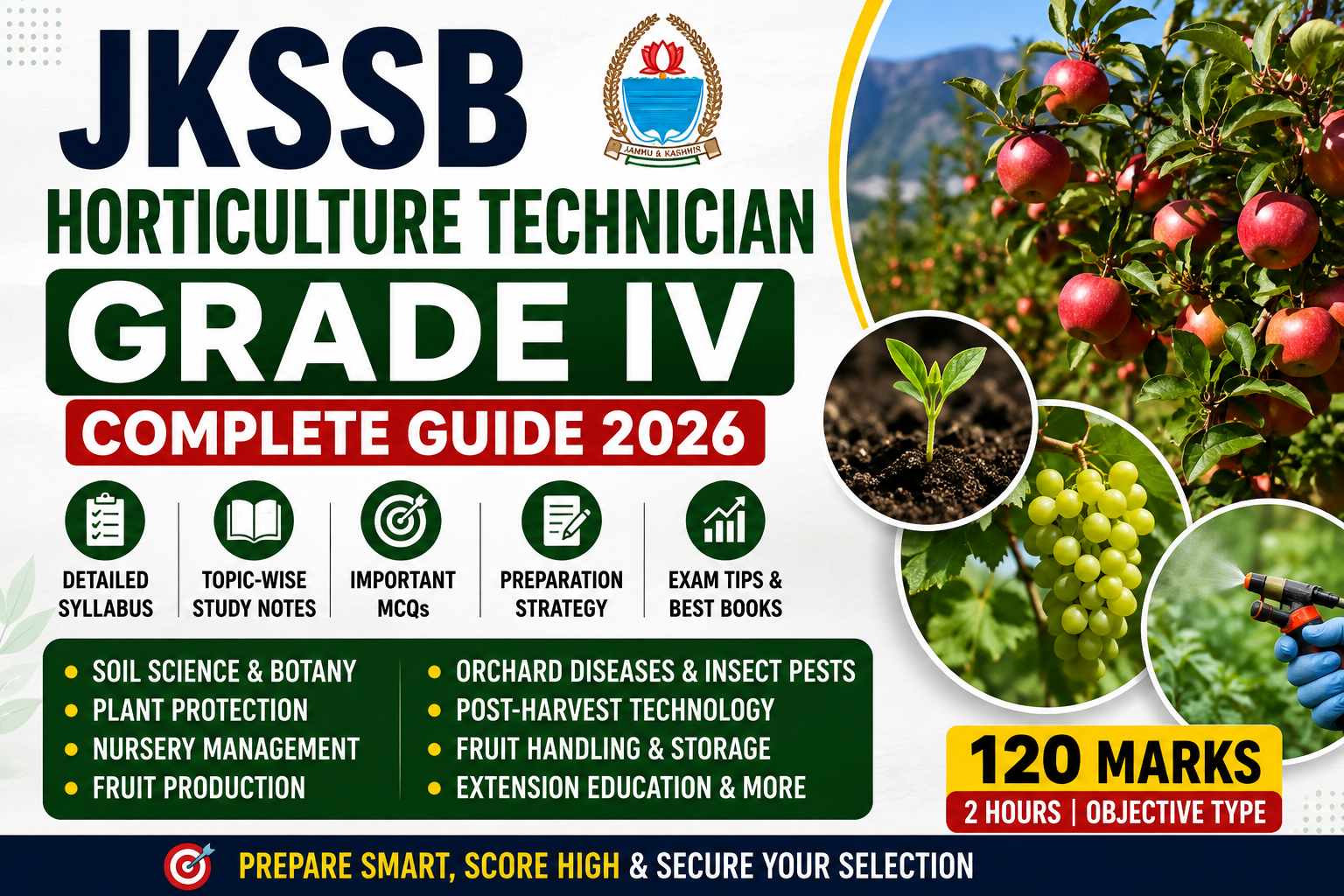
JKSSB Horticulture Technician Grade IV – Complete Syllabus
The JKSSB Horticulture Technician Grade IV examination is one of the most important recruitment examinations conducted for candidates aspiring to work in the Department of Horticulture, Jammu & Kashmir. Every year, thousands of candidates compete for limited vacancies, making proper preparation essential.
Unlike many general competitive examinations, this exam focuses heavily on horticulture fundamentals, soil science, nursery management, fruit production, orchard diseases, plant protection, and post-harvest technology. Candidates who understand the syllabus thoroughly and prepare topic-wise generally perform much better than those who rely only on general study materials.
If you are preparing for the upcoming recruitment, this guide will help you understand the syllabus, create an effective preparation strategy, and identify the most important topics for scoring high marks.
JKSSB Horticulture Technician Grade IV Exam Pattern
Before starting your preparation, you should know the structure of the examination.
Written Examination
- Total Marks: 120
- Duration: 2 Hours
- Type: Objective (Multiple Choice Questions)
Since the exam contains objective-type questions, conceptual understanding combined with regular MCQ practice is the key to success.
Download(Horticulture Technician Grade iv) Full Syllabus PDF LINK
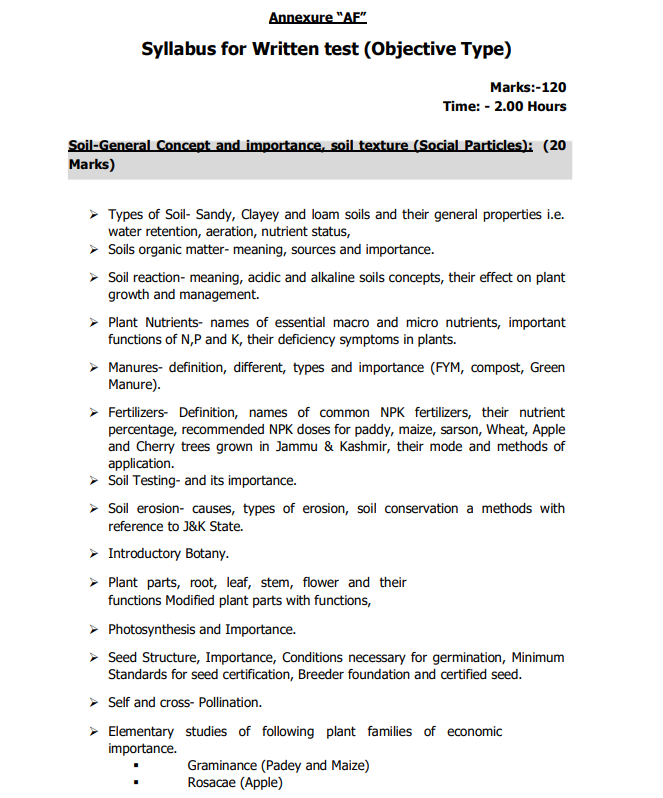
Complete JKSSB Horticulture Technician Grade IV Syllabus Overview
The syllabus is divided into six major sections, each carrying 20 marks.
These sections include:
- Soil Science & Introductory Botany
- Plant Protection Fundamentals
- Nursery Management & Fruit Production
- Orchard Diseases & Insect Pests
- Physiology & Post-Harvest Technology
- Fruit Handling, Storage & Marketing
Preparing each section individually is the best way to cover the entire syllabus without feeling overwhelmed.
Soil Science – The Foundation of Agriculture
One of the most important sections in the examination is Soil Science. Questions are frequently asked from the basic concepts of soil and nutrient management.
Candidates should understand:
- General concept of soil
- Importance of soil in agriculture
- Soil texture
- Sandy soil
- Clay soil
- Loamy soil
- Water retention capacity
- Soil aeration
- Soil fertility
- Nutrient availability
Special attention should also be given to organic matter, including:
- Farm Yard Manure (FYM)
- Compost
- Green manure
- Importance of organic matter in improving soil fertility
Questions related to acidic and alkaline soils are also common. Candidates should understand their characteristics, effect on crop growth, and management practices.
Essential Plant Nutrients
Nutrient management is another high-scoring area.
Candidates should remember the names and functions of essential nutrients.
Macronutrients
- Nitrogen (N)
- Phosphorus (P)
- Potassium (K)
Micronutrients
- Zinc
- Iron
- Copper
- Boron
- Manganese
- Molybdenum
- Chlorine
Special emphasis should be placed on:
- Functions of Nitrogen
- Functions of Phosphorus
- Functions of Potassium
- Deficiency symptoms of each nutrient
Many previous examinations have included direct questions from nutrient deficiency symptoms.
Fertilizers and Manures
Another important portion includes fertilizers and manures.
Candidates should know:
- Difference between manure and fertilizer
- Common nitrogen fertilizers
- Common phosphorus fertilizers
- Common potassium fertilizers
Particular focus should be given to the recommended fertilizer doses for crops commonly grown in Jammu & Kashmir, including:
- Paddy
- Wheat
- Maize
- Mustard (Sarson)
- Apple
- Cherry
Questions may also be asked about different methods of fertilizer application, including broadcasting, placement, foliar application, and fertigation.
Soil Testing and Soil Conservation
Soil testing is a frequently overlooked topic but carries significant weight in competitive examinations.
Important concepts include:
- Importance of soil testing
- Soil sampling methods
- Benefits of soil testing
- Balanced fertilizer recommendation
Candidates should also study:
- Soil erosion
- Water erosion
- Wind erosion
- Causes of soil degradation
- Soil conservation methods suitable for Jammu & Kashmir
Understanding local agricultural practices can help answer application-based questions.
Introductory Botany
Botany forms another major portion of the syllabus.
Candidates should understand the structure and function of different plant parts.
These include:
- Root
- Stem
- Leaf
- Flower
- Fruit
- Seed
Questions are often asked about modified plant parts and their functions.
Photosynthesis and Seed Germination
Basic plant physiology is equally important.
Candidates should prepare:
- Definition of photosynthesis
- Importance of photosynthesis
- Factors affecting photosynthesis
Similarly, seed-related concepts include:
- Structure of seed
- Seed certification standards
- Breeder seed
- Foundation seed
- Certified seed
Conditions necessary for seed germination such as moisture, oxygen, suitable temperature, and viable seed should also be revised carefully.
Pollination
The syllabus also includes pollination.
Candidates should understand:
- Self-pollination
- Cross-pollination
- Advantages of self-pollination
- Advantages of cross-pollination
Simple conceptual questions are commonly asked from this topic.
Economically Important Plant Families
A considerable number of objective questions are asked from plant families.
Candidates should remember the scientific family names of important crops.
These include:
| Crop | Family |
|---|---|
| Paddy | Gramineae (Poaceae) |
| Maize | Gramineae (Poaceae) |
| Apple | Rosaceae |
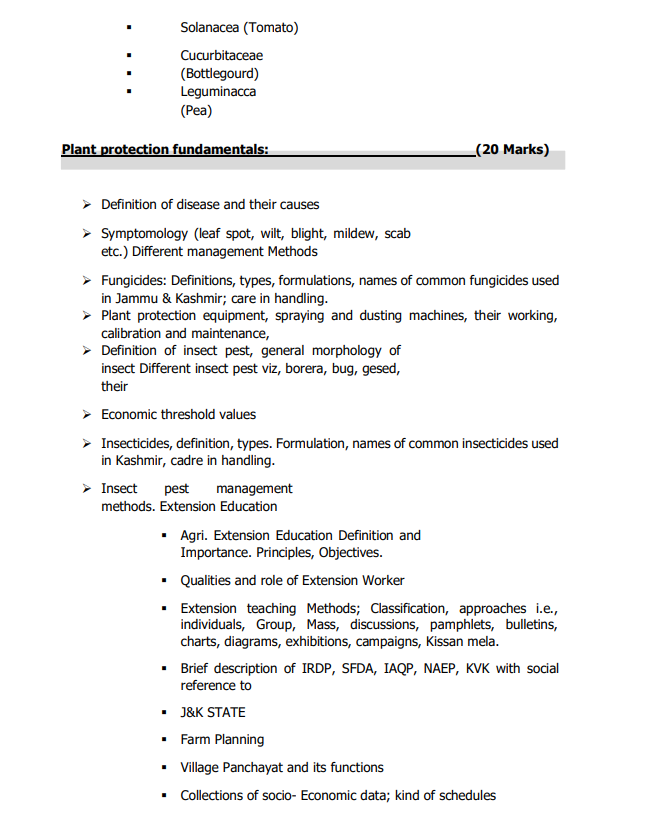
| Tomato | Solanaceae |
| Bottle Gourd | Cucurbitaceae |
| Pea | Leguminosae (Fabaceae) |
Preparing these family names thoroughly can help score easy marks.
Plant Protection Fundamentals
Plant protection is another major scoring section.
Candidates should know:
- Definition of plant disease
- Causes of diseases
- Disease symptoms
Common disease symptoms include:
- Leaf spot
- Wilt
- Blight
- Mildew
- Scab
- Canker
Understanding the difference between these diseases is important because direct MCQs are frequently asked.
Fungicides
Candidates should also prepare:
- Definition of fungicides
- Types of fungicides
- Fungicide formulations
- Common fungicides used in Jammu & Kashmir
- Safe handling of fungicides
Practical knowledge regarding disease management is often tested in competitive examinations.
Nursery Management and Plant Propagation
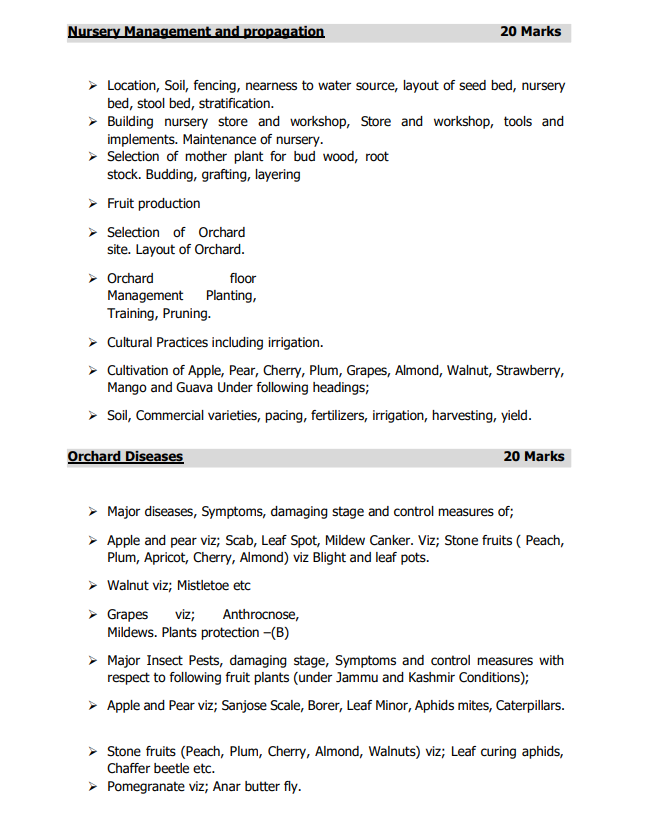
Nursery management is one of the most practical sections of the JKSSB Horticulture Technician Grade IV syllabus. Candidates are expected to understand how healthy planting material is produced before it is transferred to orchards or fields.
A good nursery should always have:
- Fertile and well-drained soil
- Reliable water source
- Proper fencing for protection
- Suitable layout of nursery beds
- Seed beds and stool beds
- Adequate drainage facilities
The syllabus also covers nursery infrastructure such as:
- Nursery store
- Workshop
- Tools and implements
- Maintenance of nursery equipment
Candidates should also understand the purpose and maintenance of nursery tools because practical questions are often converted into objective-type MCQs.
Plant Propagation Techniques
Propagation methods are among the most important topics in horticulture.
The examination generally focuses on:
- Selection of mother plants
- Rootstock selection
- Budwood selection
- Budding
- Grafting
- Layering
Each propagation method has its own advantages depending on the crop. Apple, pear, walnut, cherry, plum, and other temperate fruits commonly grown in Jammu & Kashmir are propagated using suitable vegetative methods.
Understanding why vegetative propagation is preferred over seed propagation for commercial fruit production can help solve conceptual questions.
Fruit Production in Jammu & Kashmir
Fruit production is the backbone of horticulture in Jammu & Kashmir. Candidates should study orchard establishment from the beginning rather than memorizing isolated facts.
Important topics include:
- Selection of orchard site
- Orchard layout
- Planting methods
- Orchard floor management
- Irrigation practices
- Training of fruit trees
- Pruning techniques
- Cultural operations
Questions may also be asked about fertilizers, irrigation schedules, spacing, commercial varieties, harvesting time, and average yield of important fruit crops.
The syllabus specifically mentions the following crops:
- Apple
- Pear
- Cherry
- Plum
- Grapes
- Almond
- Walnut
- Strawberry
- Mango
- Guava
Among these, Apple, Walnut, Cherry, Almond, and Pear deserve extra attention because of their importance in Jammu & Kashmir horticulture.
Orchard Diseases
Plant diseases significantly affect fruit production, making this section highly important for the examination.
Candidates should prepare the major diseases affecting different fruit crops along with their symptoms and management practices.
Apple and Pear
Study diseases such as:
- Apple Scab
- Leaf Spot
- Powdery Mildew
- Canker
Stone Fruits
For Peach, Plum, Apricot, Cherry, and Almond, prepare:
- Blight
- Leaf Spot
Walnut
Important disease:
- Mistletoe
Grapes
Major diseases include:
- Anthracnose
- Downy Mildew
- Powdery Mildew
Instead of memorizing only disease names, understand the symptoms, damaging stage, and recommended control measures. Questions are frequently framed in this pattern.
Major Insect Pests
Another important section focuses on insect pests affecting fruit crops under Jammu & Kashmir conditions.
Candidates should study:
Apple and Pear
- San Jose Scale
- Borers
- Leaf Miner
- Aphids
- Mites
- Caterpillars
Stone Fruits
- Leaf Curling Aphids
- Chaffer Beetle
Walnut
- Common insect pests affecting walnut orchards
Pomegranate
- Anar Butterfly
For each insect, prepare:
- Identification
- Damaging stage
- Symptoms
- Control measures
Insecticides and Plant Protection Equipment
Candidates should understand the basics of integrated pest management.
Important areas include:
- Definition of insecticides
- Types of insecticides
- Formulations
- Common insecticides used in Jammu & Kashmir
- Safe handling practices
The syllabus also covers plant protection equipment, including:
- Sprayers
- Dusters
- Calibration of spraying equipment
- Maintenance of machines
Practical knowledge from these topics is often tested through straightforward objective questions.
Extension Education
Although many candidates ignore this section, it can provide easy marks if prepared properly.
Important topics include:
- Definition of Agricultural Extension Education
- Objectives
- Principles
- Role of Extension Worker
- Qualities of an Extension Worker
Candidates should also revise different extension teaching methods, such as:
- Individual approach
- Group approach
- Mass communication
- Demonstrations
- Discussions
- Exhibitions
- Campaigns
- Kisan Melas
- Charts
- Bulletins
- Pamphlets
Government programmes mentioned in the syllabus, including IRDP, SFDA, IAQP, NAEP, and KVK, should also be studied with reference to agricultural development.
Post-Harvest Technology
The final sections of the syllabus focus on maintaining fruit quality after harvesting.
Candidates should prepare:
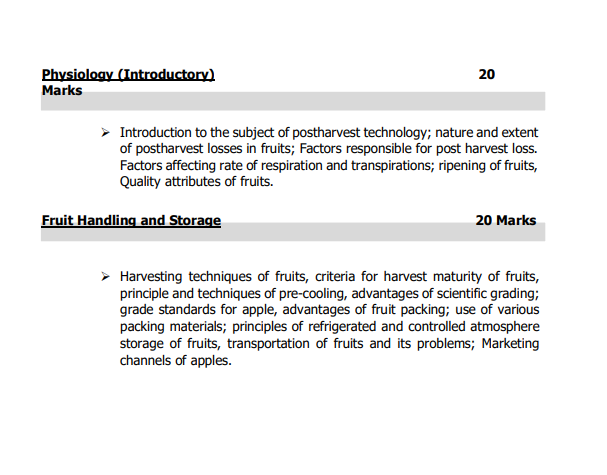
- Introduction to post-harvest technology
- Causes of post-harvest losses
- Nature and extent of fruit losses
- Respiration in fruits
- Transpiration
- Fruit ripening
- Quality attributes of fruits
These topics are increasingly important because reducing post-harvest losses directly improves farmers' income.
Fruit Handling and Storage
Proper harvesting and storage techniques are essential for preserving fruit quality.
Important topics include:
- Harvest maturity indices
- Harvesting techniques
- Pre-cooling
- Scientific grading
- Apple grading standards
- Fruit packing
- Packing materials
- Refrigerated storage
- Controlled Atmosphere (CA) Storage
- Transportation of fruits
- Problems during transportation
- Marketing channels of apples
Apple marketing and storage are particularly relevant because Jammu & Kashmir is one of India's leading apple-producing regions.
ALSO READ: JKSSB ANNOUNCE 518 VACANCIES
How to Prepare for JKSSB Horticulture Technician Grade IV
Success in this examination depends on consistent preparation rather than last-minute study. A smart strategy can significantly improve your score.
Here are some practical tips:
- Read the syllabus carefully before starting.
- Study one topic at a time instead of jumping between subjects.
- Focus on conceptual understanding rather than rote memorization.
- Prepare short notes for revision.
- Practice objective-type MCQs regularly.
- Revise scientific names, plant families, diseases, insect pests, fertilizers, and horticultural practices frequently.
- Solve previous years' JKSSB questions to understand the exam pattern.
- Dedicate extra time to fruit crops that are commercially important in Jammu & Kashmir.
Regular revision combined with daily MCQ practice is the most effective way to improve accuracy and speed.
Why Choose JK Exam Library for Preparation?
Preparing from authentic and exam-oriented material saves valuable time. At JK Exam Library, candidates can access:
- Comprehensive syllabus-wise notes
- Topic-wise MCQs
- Previous Year Questions
- Mock Tests
- Current Affairs
- Practice Quizzes
- Regular updates for JKSSB examinations
Our study resources are designed according to the latest JKSSB exam pattern, helping aspirants focus only on the topics that matter most.
Frequently Asked Questions (FAQs)
1. What is the total marks for the JKSSB Horticulture Technician Grade IV written examination?
The written examination consists of 120 objective-type marks and is conducted over 2 hours.
2. Which section carries the highest weightage?
The syllabus is divided into six major sections, and each section carries 20 marks, making every topic equally important.
3. Is the syllabus focused on Jammu & Kashmir horticulture?
Yes. Several topics, including fertilizer recommendations, orchard diseases, insect pests, fruit production, and apple marketing, are specifically related to horticultural practices in Jammu & Kashmir.
4. Which fruit crops are most important for the examination?
Apple, Pear, Cherry, Plum, Grapes, Almond, Walnut, Strawberry, Mango, and Guava are specifically mentioned in the official syllabus.
5. Are previous year questions useful for preparation?
Absolutely. Previous year papers help candidates understand the pattern, difficulty level, and frequently repeated concepts.
6. Is Nursery Management an important topic?
Yes. Nursery management, propagation methods, orchard establishment, and fruit production together form a significant portion of the syllabus.
7. How should I prepare for Plant Protection?
Focus on diseases, insect pests, fungicides, insecticides, symptoms, damaging stages, and control measures for major fruit crops grown in Jammu & Kashmir.
8. Where can I get complete JKSSB Horticulture Technician Grade IV study material?
You can prepare using structured notes, topic-wise MCQs, mock tests, and previous year questions available on JK Exam Library, which are designed according to the latest JKSSB syllabus.
Final Words
The JKSSB Horticulture Technician Grade IV examination is an excellent opportunity for candidates interested in the horticulture sector of Jammu & Kashmir. Since the syllabus is technical yet well-defined, systematic preparation can make a significant difference.
Rather than studying random material, focus on the official syllabus, strengthen your concepts in soil science, botany, nursery management, orchard practices, plant protection, and post-harvest technology, and revise regularly. With disciplined study, consistent MCQ practice, and quality resources, securing a good score becomes much more achievable.
If you're looking for updated notes, practice questions, mock tests, and exam-oriented study material, JK Exam Library can be your one-stop destination to prepare confidently for the JKSSB Horticulture Technician Grade IV examination.