JKSSB Veterinary Pharmacist recruitment 2026, you already know that the competition is fierce and the stakes are high. What separates a successful candidate from the rest is not just hard work, but a clear understanding of the syllabus and a structured preparation plan that aligns with the marks distribution. The official JKSSB syllabus for Veterinary Pharmacist lays out a precise roadmap: 20 marks for Basic Mathematics, 20 marks for Basic Reasoning, 30 marks for Basic English, and 50 marks for General Awareness and Science. Each section demands a specific approach, and using a scattered collection of random books or online notes often leads to gaps that prove costly on exam day.
The most effective way to prepare is to have a single, consolidated source that covers every topic mentioned in the syllabus, provides ample practice questions, and includes full-length mock tests that mirror the actual exam pattern. Whether you are starting your preparation or are in the final revision phase, having the JKSSB Veterinary Pharmacist full study material with mock tests pdf download at your fingertips can transform your preparation from ordinary to exceptional. This guide is built exactly on the syllabus you need to follow, and it will show you how to master each section with precision.
Understanding the Marks Distribution and Syllabus Breakdown
The JKSSB Veterinary Pharmacist examination is designed to test a candidate’s aptitude across four key areas. The marks distribution is not arbitrary—it reflects the competencies required for the role. The General Awareness and Science section carries the highest weightage of 50 marks, making it the most critical area to focus on. However, the other three sections—Basic Mathematics, Basic Reasoning, and Basic English—are equally important because they offer scoring opportunities that can elevate your overall rank.
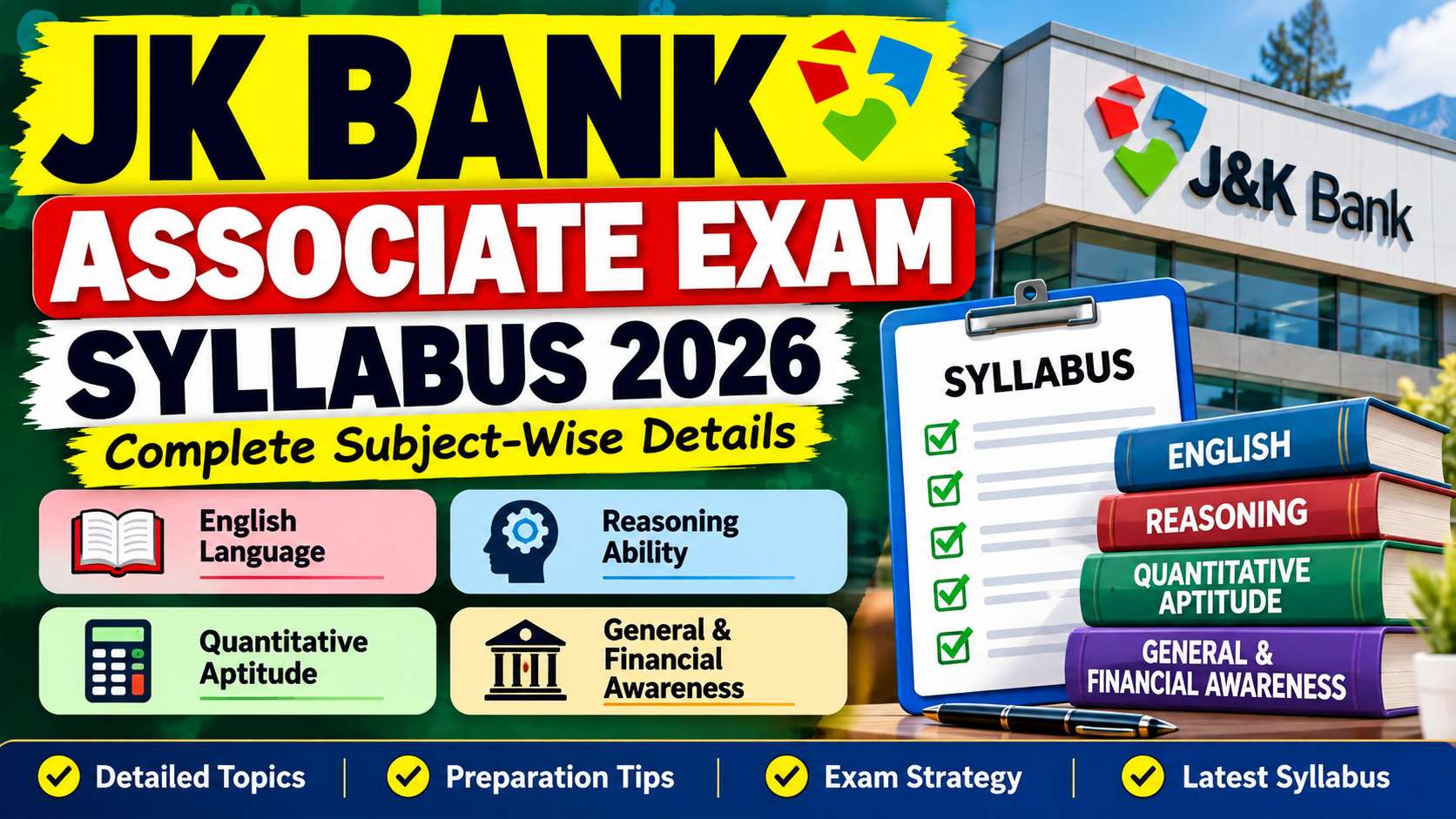
Here is the complete syllabus with topics as officially prescribed by JKSSB:
| Section | Topics | Marks |
|---|---|---|
| Basic Mathematics | Percentage, Average, Time Work and Distance, Ratio and Proportions, Problem of Age, Probability, LCM & HCF, Mensuration | 20 |
| Basic Reasoning | Analogies, Relationship Concepts, Figure Odd One Out, Direct Sense, Figure Series Completion, Venn Diagram, Number Series, Coding/Decoding | 20 |
| Basic English | Articles, Synonyms, Antonyms, Preposition, Verbs, Reading Comprehension, Determiners, Spellings, Sentences | 30 |
| General Awareness & Science | General Current Events (National Level), Sports, India Culture, India History, Indian Geography, Capital/State, General Science, Health Hygiene and Sanitation, Geography of Jammu and Kashmir, Culture of Jammu and Kashmir, History of Jammu and Kashmir | 50 |
A quick glance at this table reveals a balanced mix of conceptual, analytical, and factual domains. Success lies in recognizing the nature of each section and tailoring your preparation strategy accordingly.
Section 1: Basic Mathematics (20 Marks) – Accuracy Over Speed
The Basic Mathematics section is often underestimated by aspirants. Some assume that since the questions are of school-level difficulty, they can be handled without dedicated practice. In reality, this section becomes the deciding factor in close merit lists. The questions are not complex, but they are framed to test your speed and accuracy under exam pressure.
Key Topics in Detail:
Percentage and Average: These are foundational. Expect questions on profit-loss, discount, population increase, and average of numbers or ages. The trick is to learn shortcut methods for calculating percentages without a calculator, as the exam is computer-based with an on-screen calculator, but speed matters.
Time, Work, and Distance: This includes problems on trains, boats and streams, and work efficiency. The relationship between speed, time, and distance, and the concept of work done per day are frequently tested.
Ratio and Proportion: Questions often combine ratio with age problems or partnership. Be thorough with direct and inverse proportions.
Problem of Age: These questions are usually based on linear equations. Practice framing equations from given conditions.
Probability: Basic probability problems involving coins, dice, or cards are common. Stick to the fundamentals—no advanced theorems are needed.
LCM and HCF: Expect word problems where you need to find the least number or the greatest divisor. Also, questions on co-prime numbers appear occasionally.
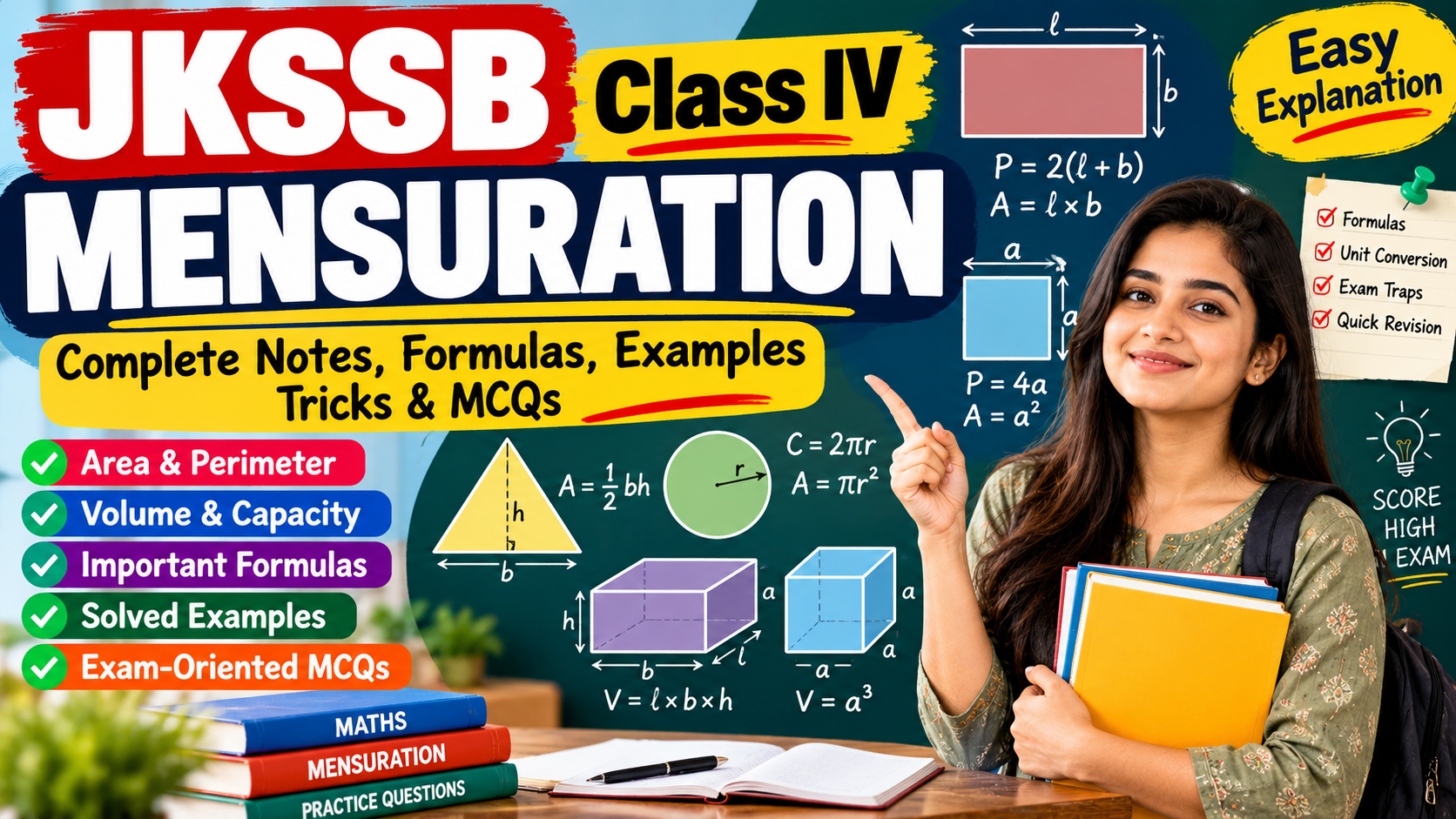
Mensuration: Questions from areas and volumes of basic 2D and 3D figures like squares, rectangles, circles, cylinders, and cubes.
Preparation Strategy:
The key to mastering this section is consistent practice. Instead of trying to solve complex problems, focus on building speed with basic arithmetic. Use a dedicated practice set that provides topic-wise questions. After completing a topic like Percentage, take a small mock test of 10-15 questions to gauge your understanding. Over time, aim to solve at least 20 mathematics questions daily to keep your calculation skills sharp.
Section 2: Basic Reasoning (20 Marks) – The Art of Pattern Recognition
Reasoning tests your ability to think logically and identify patterns quickly. This section is highly scoring if you understand the types of questions and practice enough to develop a sharp eye for patterns. The topics prescribed are standard and appear in most competitive exams.
Key Topics in Detail:
Analogies: Both word-based and number-based analogies. You need to identify the relationship between the first pair and apply it to the second.
Relationship Concepts: Questions based on family trees, blood relations, and coded relationships.
Figure Odd One Out and Figure Series Completion: These are non-verbal reasoning questions. You will be given a set of figures and asked to identify which one does not belong, or to complete a sequence.
Direct Sense: Direction and distance problems. You must be comfortable with the concepts of North, South, East, West, and the angles between them.
Venn Diagram: Questions that test your ability to represent sets and their relationships visually. Often combined with syllogisms.
Number Series: Identify the pattern in a sequence of numbers and find the missing term. Patterns can be arithmetic, geometric, or based on squares/cubes.
Coding/Decoding: Letters or words are coded based on a specific rule (e.g., shifting positions, reverse order). You need to decode the pattern.
Preparation Strategy:
Reasoning is best mastered by understanding the underlying logic rather than memorizing patterns. Start with one topic at a time—for example, spend two days on analogies and blood relations, then move to series. Use a mock test series that includes sectional tests for reasoning. Analyze every wrong answer to understand why you missed the pattern. With regular practice, your speed in this section will naturally increase.
Section 3: Basic English (30 Marks) – Foundation of Communication
The Basic English section carries 30 marks, making it the second highest-scoring section after General Awareness. The questions test your grammatical accuracy, vocabulary, and reading comprehension. Since this section is often perceived as lengthy, time management becomes crucial.
Key Topics in Detail:
Articles, Prepositions, Determiners, Verbs: These are pure grammar questions. You need to know the correct usage of ‘a’, ‘an’, ‘the’; prepositions like ‘in’, ‘on’, ‘at’; and determiners like ‘some’, ‘any’, ‘many’. Verb questions focus on subject-verb agreement and tenses.
Synonyms and Antonyms: Vocabulary-based questions. The words are usually of moderate difficulty. Building a habit of learning new words daily is helpful.
Spellings and Sentences: You may be asked to identify the correctly spelled word or to detect errors in sentences.
Reading Comprehension: A short passage will be given, followed by questions. This section tests your ability to understand and interpret the text quickly.
Preparation Strategy:
For grammar, the key is to understand rules rather than rely on intuition. Use a concise grammar reference and practice error-detection questions regularly. For vocabulary, maintain a notebook of new words with their synonyms and antonyms. For reading comprehension, practice at least one passage every three days to improve your reading speed and ability to locate answers quickly.
Section 4: General Awareness and Science (50 Marks) – The Game Changer
With 50 marks, this section is the most critical for your overall score. It covers a wide range of topics from national current events to the specific history, geography, and culture of Jammu and Kashmir. A systematic approach is essential to cover this vast syllabus without feeling overwhelmed.
Key Topics in Detail:
General Current Events (National Level): This includes recent appointments, government schemes, important days, awards, sports events, and major national developments in the last 12-18 months.
India Culture, History, and Geography: Ancient, medieval, and modern Indian history; freedom struggle; Indian art and architecture; physical geography of India, rivers, mountains, climate, and economic geography.
Capital/State: Knowledge of Indian states and union territories, their capitals, and key facts.
General Science: Basic physics, chemistry, and biology at the 10th standard level. Focus on everyday phenomena, nutrition, diseases, and scientific instruments.
Health, Hygiene and Sanitation: This includes topics like communicable diseases, vaccination, clean water, sanitation practices, and government health initiatives.
Geography of Jammu and Kashmir: Physical features, rivers, climate, agriculture, and important tourist destinations of the Union Territory.
Culture of Jammu and Kashmir: Folk music, dance forms, festivals, languages, and traditional crafts.
History of Jammu and Kashmir: From ancient times to the present, including the Dogra rule, the accession to India, and recent reorganization.
Preparation Strategy:
Divide this section into two parts: static and dynamic. Static includes history, geography, culture, and general science. Dynamic includes current events. For static topics, use concise notes that cover key facts. For current events, follow a monthly current affairs magazine focused on national and J&K-specific news. Create flash cards for important dates, personalities, and geographical features of J&K. Since this section carries the highest marks, allocate at least 40% of your study time to it.
The Role of Mock Tests in Aligning with the Syllabus
No matter how well you study each topic, you will not know your true readiness until you sit for a mock test that replicates the JKSSB exam pattern. Mock tests serve as the bridge between knowledge and performance. When you take a JKSSB Veterinary Pharmacist mock test that is designed exactly according to the syllabus with the correct marks distribution, you gain several advantages.
First, you become familiar with the flow of the exam—switching between Mathematics, Reasoning, English, and General Awareness within a two-hour window. Second, you develop a sense of time allocation: how many minutes to spend on the 20-mark Mathematics section versus the 50-mark General Awareness section. Third, mock tests reveal your weak spots. You might discover that you are consistently losing marks in Probability or that your reading comprehension speed is slower than required.
A comprehensive mock test series should include:
Topic-wise tests for each subtopic (e.g., a separate test on Percentage, another on Coding-Decoding).
Sectional tests for Mathematics, Reasoning, English, and General Awareness.
Full-length mock tests that combine all sections as per the actual exam pattern.
When you download a complete study material package that integrates these mock tests in PDF format, you can practice both online and offline, making your preparation flexible and thorough.
A 90-Day Preparation Plan Based on This Syllabus
A structured timeline is essential to cover the syllabus without last-minute panic. Here is a realistic plan that divides the syllabus into manageable phases.
Phase 1: Foundation (Days 1–40)
Focus on building conceptual clarity in all sections. For Mathematics, cover Percentage, Ratio, LCM/HCF, and Mensuration. For Reasoning, start with Analogies, Number Series, and Coding/Decoding. For English, revise grammar rules for Articles, Prepositions, and Verbs. For General Awareness, begin with Indian History and Geography of J&K. At the end of this phase, take topic-wise tests to ensure you have grasped the basics.
Phase 2: Deep Practice (Days 41–70)
Now shift to advanced topics and increase your practice intensity. Cover remaining topics: Time Work Distance, Probability, Age problems in Mathematics; Figure Series and Venn Diagram in Reasoning; Reading Comprehension and Synonyms/Antonyms in English; and Indian Culture, General Science, and Current Affairs in General Awareness. Take sectional tests regularly and analyze your performance.
Phase 3: Full-Length Simulation and Revision (Days 71–90)
The final phase is dedicated to full-length mock tests. Take at least one full test every alternate day. On the days between tests, review your mistakes and revise the topics where you are losing marks. Create a quick revision sheet for each section with formulas (Mathematics), pattern types (Reasoning), grammar rules (English), and key facts (General Awareness). Use the download complete syllabus PDF as a checklist to ensure no topic is left out.
Common Mistakes to Avoid
Ignoring the marks distribution: Some candidates spend equal time on all sections, not realizing that General Awareness is worth 50 marks. Prioritize according to weightage.
Skipping mock test analysis: Taking a test without analyzing mistakes is a waste. Spend at least as much time analyzing as taking the test.
Neglecting J&K-specific topics: Many aspirants focus only on national-level current affairs and ignore the geography, culture, and history of Jammu and Kashmir. This can cost valuable marks.
Over-relying on a single book for General Science: General Science questions often come from everyday science. Use multiple sources or good notes to cover a broad range of topics.
Not practicing reasoning non-verbal questions: Figure-based reasoning requires practice. Without enough exposure, you may struggle to identify patterns quickly.
Quick Revision: High-Yield Points for Each Section
Mathematics: Memorize percentage to fraction conversions, average formulas, and LCM/HCF shortcuts. For mensuration, remember the formulas for area and volume of common shapes.
Reasoning: Practice 5-10 analogy and series questions daily. For direction sense, draw a simple diagram for each problem.
English: Common error types: subject-verb agreement, incorrect prepositions, and wrong tense usage. For synonyms/antonyms, focus on words that appear frequently in competitive exams.
General Awareness: Key historical events of J&K (Dogra rule, 1947 accession, 2019 reorganization); important rivers (Jhelum, Chenab); folk dances (Rouf, Dumhal); current Chief Secretary and Governor; recent national awards and sports achievements.
Frequently Asked Questions
1. What is the exact marks distribution for the JKSSB Veterinary Pharmacist exam?
The exam comprises four sections: Basic Mathematics (20 marks), Basic Reasoning (20 marks), Basic English (30 marks), and General Awareness and Science (50 marks). Total marks are 120, and the duration is two hours.
2. Is the syllabus for JKSSB Veterinary Pharmacist the same as other JKSSB posts?
No, the syllabus varies by post. The Veterinary Pharmacist syllabus focuses on the topics listed above. It does not include veterinary professional subjects; instead, it tests general aptitude and awareness.
3. Where can I download the complete syllabus in PDF format?
You can download the official syllabus from the JKSSB website. However, a consolidated study material that aligns with this syllabus is often available on educational platforms and includes topic-wise notes and mock tests.
4. How many mock tests should I practice before the final exam?
It is advisable to take at least 20 full-length mock tests along with sectional tests. This provides sufficient practice for time management and identifying weak areas.
5. Is the General Awareness section limited to national events, or does it include J&K too?
It includes both. As per the syllabus, General Current Events are at the national level, but there are separate topics for Geography, Culture, and History of Jammu and Kashmir. So you must prepare both national and J&K-specific content.
6. What is the best way to prepare for the Basic Mathematics section without a calculator?
Practice mental calculations and learn shortcut techniques. Solve problems manually using rough sheets to improve speed. The on-screen calculator provided in the exam can be used, but over-reliance on it can slow you down.
7. Are there negative marks in the JKSSB Veterinary Pharmacist exam?
The official notification should be checked for the current year. Typically, JKSSB exams do not have negative marking, but you must confirm from the latest advertisement.
8. Can I clear the exam by focusing only on General Awareness?
No, all sections are compulsory. While General Awareness carries the highest marks, neglecting Mathematics, Reasoning, or English can bring down your overall score below the cut-off.
Conclusion
The JKSSB Veterinary Pharmacist exam 2026 is a well-defined challenge. The syllabus is clear, the marks distribution is transparent, and the path to success lies in systematic preparation. By understanding the nuances of each section—building speed in Mathematics, sharpening logical patterns in Reasoning, mastering grammar in English, and covering both static and current topics in General Awareness—you can approach the exam with confidence.
The key is to stop searching for random resources and instead work with a consolidated study material that gives you everything in one place: topic-wise notes, practice sets, and full-length mock tests designed exactly on the syllabus. When you have that, your preparation shifts from scattered to streamlined, from uncertain to confident.
Now is the time to take action. Download the complete study material and mock test package, follow a disciplined schedule, and give yourself the best chance to secure your place in the JKSSB merit list. Your goal is within reach—start today.