JKSSB Finance Accounts Assistant Free MCQs (Accountancy & Statistics) – 30 Statement-Based Questions with Detailed Practice
Preparing for the JKSSB Finance Accounts Assistant (FAA) examination requires much more than memorizing definitions and formulas. The competition has increased significantly over the last few recruitment cycles, and candidates who understand accounting concepts and statistical principles deeply always perform better than those relying only on rote learning.
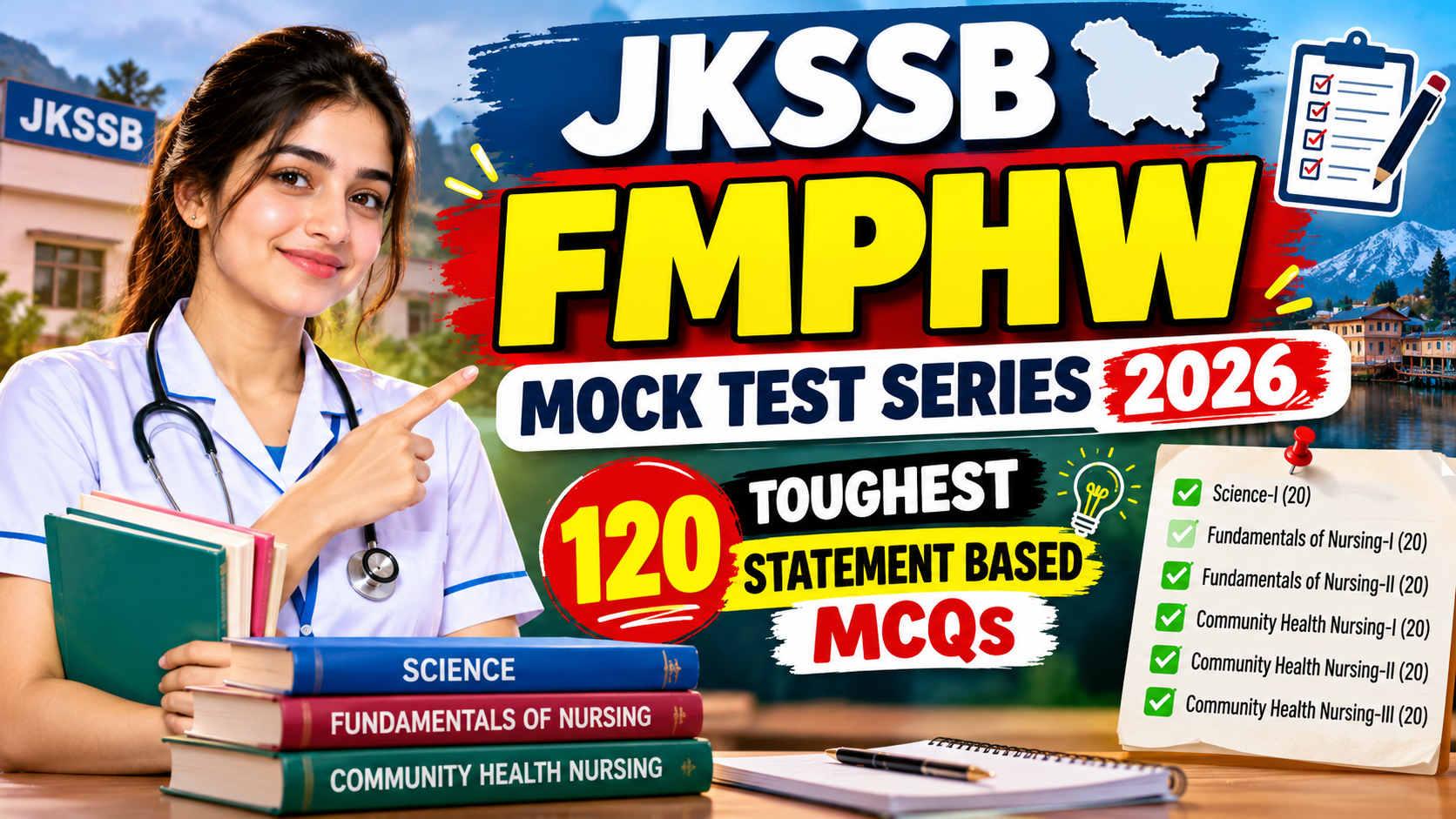
One of the most effective ways to prepare is by solving statement-based MCQs. These questions examine conceptual clarity, logical thinking, and the ability to identify correct and incorrect statements. Recent competitive examinations have shown a noticeable increase in conceptual statement-based questions, especially from Accountancy and Statistics.
If you're searching for JKSSB Finance Accounts Assistant Free MCQs, this practice set has been designed specifically for your preparation. Along with important concepts, you'll also find 30 high-quality statement-based MCQs based on the syllabus commonly covered in Finance Accounts Assistant examinations.
Whether you are beginning your preparation or revising before the examination, these questions will help strengthen your fundamentals.
Complete Study material test series and full study material
Why Statement-Based MCQs Matter in JKSSB Finance Accounts Assistant
Unlike direct factual questions, statement-based MCQs require candidates to carefully analyze multiple statements before choosing the correct option.
These questions test:
- Conceptual understanding
- Practical accounting knowledge
- Interpretation skills
- Statistical reasoning
- Elimination techniques
- Accuracy under time pressure
Candidates who regularly practice statement-based questions generally find it easier to solve moderate and difficult questions during the actual examination.
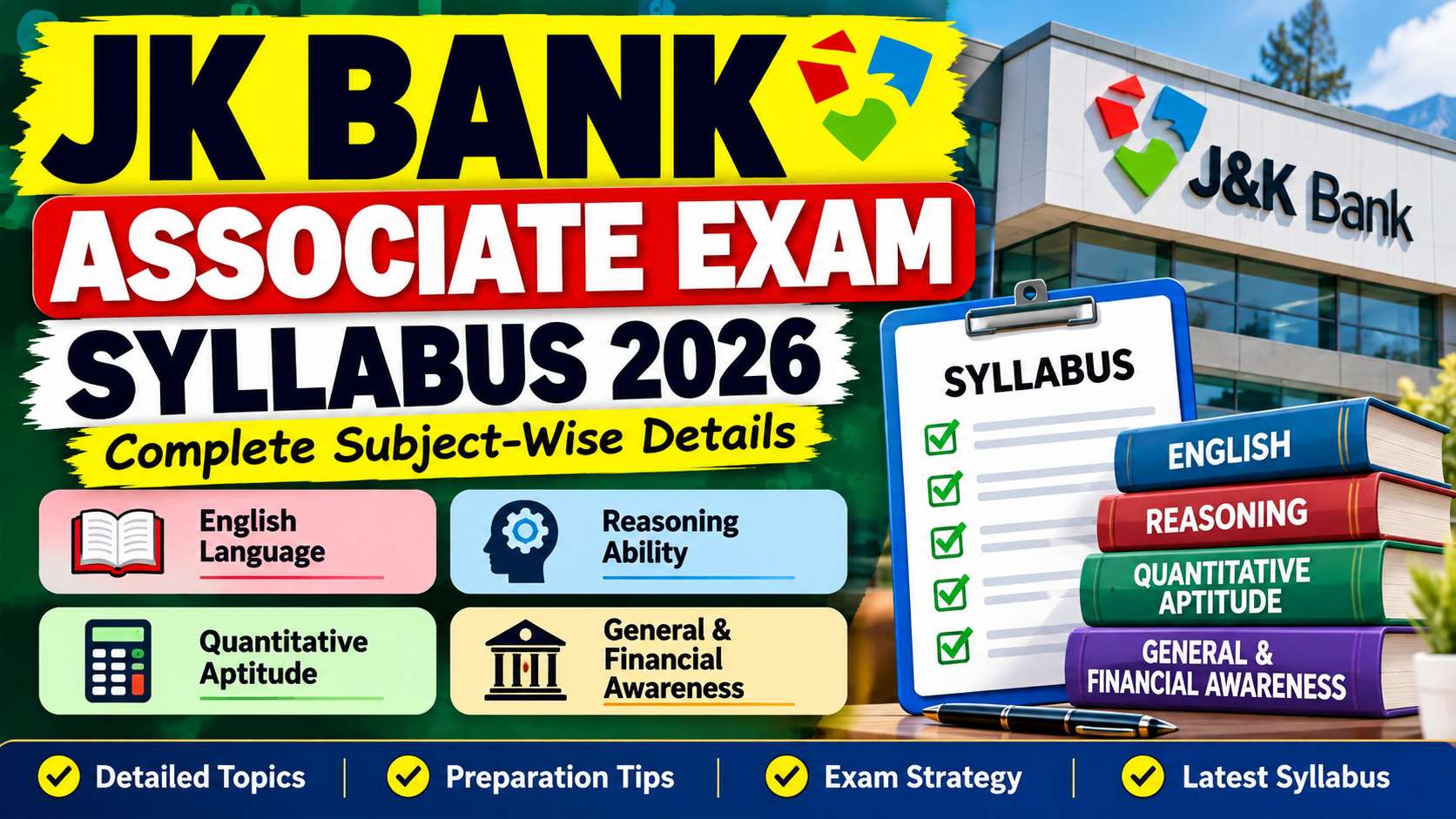
Important Topics to Prepare
| Accountancy | Statistics |
|---|---|
| Journal Entries | Mean, Median & Mode |
| Ledger Accounts | Measures of Dispersion |
| Trial Balance | Probability |
| Final Accounts | Correlation |
| Depreciation | Regression |
| Bank Reconciliation | Sampling |
| Rectification of Errors | Index Numbers |
| Bills of Exchange | Time Series |
| Partnership Accounts | Standard Deviation |
| Company Accounts | Frequency Distribution |
Smart Preparation Strategy
Instead of studying randomly, divide your preparation into manageable sections.
| Week | Focus Area |
|---|---|
| Week 1 | Journal, Ledger, Trial Balance |
| Week 2 | Final Accounts & Depreciation |
| Week 3 | Partnership & Company Accounts |
| Week 4 | Statistics Basics |
| Week 5 | Probability & Correlation |
| Week 6 | Mixed MCQs + Revision |
| Final Week | Full-Length Practice Tests |
Top 30 Statement-Based MCQs (Accountancy & Statistics)
Q1.
Statement I: The Accounting Equation (Assets = Capital + Liabilities) remains balanced after every business transaction, irrespective of the number of accounts affected.
Statement II: Every transaction recorded under the Double Entry System affects at least two accounts, but it may not necessarily keep the accounting equation balanced until the Trial Balance is prepared.
A) Only Statement I is correct
B) Only Statement II is correct
C) Both Statements I and II are correct
D) Both Statements I and II are incorrect
Answer: A
Q2.
Statement I: A Trial Balance prepared from ledger balances can agree even if compensating errors have occurred.
Statement II: Agreement of the Trial Balance is conclusive proof that all accounting entries have been correctly recorded.
A) Only Statement I is correct
B) Only Statement II is correct
C) Both Statements I and II are correct
D) Both Statements I and II are incorrect
Answer: A
Q3.
Statement I: Depreciation is a systematic allocation of the depreciable amount of an asset over its useful life.
Statement II: Depreciation is charged to determine the market value of fixed assets at the end of every accounting period.
Answer: A
Q4.
Statement I: Outstanding expenses represent obligations of the business and are shown as current liabilities.
Statement II: Prepaid expenses relate to future accounting periods and therefore are treated as current assets.
Answer: C
Q5.
Statement I: Capital receipts generally affect the Balance Sheet.
Statement II: Revenue receipts generally affect the Profit and Loss Account.
Answer: C
Q6.
Statement I: Goodwill generated internally cannot normally be recognized as an asset in financial statements.
Statement II: Purchased goodwill is generally recognized as an intangible asset.
Answer: C
Q7.
Statement I: Bank Reconciliation Statement is prepared to reconcile differences between the Cash Book and the Pass Book.
Statement II: Preparation of a Bank Reconciliation Statement automatically rectifies accounting mistakes committed in the Cash Book.
Answer: A
Q8.
Statement I: Provision is created for known liabilities whose amount cannot be determined with certainty.
Statement II: Reserve is created to meet future unknown losses and therefore is treated as a liability.
Answer: A
Q9.
Statement I: A Capital Expenditure generally provides benefits extending beyond one accounting period.
Statement II: Purchase of stationery for office use is treated as Capital Expenditure because it is essential for business operations.
Answer: A
Q10.
Statement I: Rectification of errors affecting one side of an account requires a Suspense Account only if the Trial Balance has already been prepared.
Statement II: Errors of omission can always be detected through disagreement of the Trial Balance.
Answer: A
Statistics
Q11.
Statement I: Arithmetic Mean is affected by extreme observations.
Statement II: Median is generally preferred over Mean when the data contains extreme values.
Answer: C
Q12.
Statement I: Standard Deviation measures the average deviation from the Mean.
Statement II: A smaller Standard Deviation indicates greater consistency among observations.
Answer: C
Q13.
Statement I: Correlation measures the degree of association between variables.
Statement II: A high correlation coefficient necessarily proves a cause-and-effect relationship.
Answer: A
Q14.
Statement I: The coefficient of variation is useful for comparing variability among different data sets.
Statement II: Coefficient of Variation is expressed as a percentage.
Answer: C
Q15.
Statement I: Probability of an impossible event is zero.
Statement II: Probability of a certain event is one.
Answer: C
Q16.
Statement I: Random Sampling gives every unit in the population an equal chance of selection.
Statement II: Convenience Sampling eliminates sampling bias.
Answer: A
Q17.
Statement I: Regression analysis is primarily used for prediction.
Statement II: Regression analysis can exist without any relationship between variables.
Answer: A
Q18.
Statement I: Index Numbers are used to measure relative changes over time.
Statement II: Consumer Price Index is an example of a weighted index number.
Answer: C
Q19.
Statement I: A Histogram is suitable for continuous frequency distributions.
Statement II: Bar Diagrams are generally used for qualitative or discrete data.
Answer: C
Q20.
Statement I: If Variance equals zero, all observations are identical.
Statement II: Standard Deviation can never be zero.
Answer: A
Mixed Advanced Questions
Q21.
Statement I: Every debit must have a corresponding credit of equal amount.
Statement II: Every credit entry increases owner's capital.
Answer: A
Q22.
Statement I: Closing Stock appears in both Trading Account and Balance Sheet when adjustment is given outside the Trial Balance.
Statement II: Closing Stock appearing inside the Trial Balance is shown only in the Balance Sheet.
Answer: C
Q23.
Statement I: Bills Receivable is treated as a Current Asset.
Statement II: Bills Payable is treated as Current Liability.
Answer: C
Q24.
Statement I: Journal is called the Book of Original Entry.
Statement II: Ledger is called the Book of Final Entry.
Answer: C
Q25.
Statement I: Mean, Median and Mode are measures of Central Tendency.
Statement II: Range and Standard Deviation are measures of Dispersion.
Answer: C
Q26.
Statement I: Partnership Deed governs the mutual rights and duties of partners.
Statement II: In absence of Partnership Deed, interest on capital is always payable at 12%.
Answer: A
Q27.
Statement I: Capital Loss cannot normally be adjusted against Revenue Profit in financial accounting.
Statement II: Revenue Loss always reduces Capital Account directly.
Answer: D
Q28.
Statement I: Cash Book records only cash and bank transactions.
Statement II: Cash Book itself serves as both Journal and Ledger for cash transactions.
Answer: C
Q29.
Statement I: Normal Distribution is perfectly symmetrical.
Statement II: In a Normal Distribution, Mean = Median = Mode.
Answer: C
Q30.
Statement I: Two variables may exhibit a very high positive correlation simply because both are influenced by a common third variable; therefore, correlation alone is insufficient to establish causation.
Statement II: Financial statements prepared strictly according to accounting principles may still fail to reveal the complete economic reality of a business because they rely on historical cost, accounting estimates, and established accounting assumptions.
A) Only Statement I is correct
B) Only Statement II is correct
C) Both Statements I and II are correct
D) Both Statements I and II are incorrect
Answer: C
Q31.
Statement I: According to the Going Concern Concept, financial statements are prepared assuming that the business will continue for the foreseeable future.
Statement II: If the Going Concern assumption no longer holds, assets should generally be valued at realizable values rather than historical cost.
A) Only Statement I is correct
B) Only Statement II is correct
C) Both Statements are correct
D) Both Statements are incorrect
Answer: C
Q32.
Statement I: The Matching Principle requires revenues of a period to be matched with expenses incurred to earn those revenues.
Statement II: Under the Matching Principle, payment of an expense determines the accounting period in which it should be recognized.
Answer: A
Q33.
Statement I: A Contingent Liability is disclosed in the financial statements but generally not recognized unless recognition criteria are satisfied.
Statement II: Every Contingent Liability automatically becomes an actual liability at year-end.
Answer: A
Q34.
Statement I: Revenue is recognized when it is earned, not necessarily when cash is received.
Statement II: The Accrual Concept ignores outstanding income and outstanding expenses.
Answer: A
Q35.
Statement I: A Suspense Account may be opened to temporarily balance the Trial Balance.
Statement II: The Suspense Account permanently forms part of the Balance Sheet.
Answer: A
Q36.
Statement I: Under the Written Down Value Method, depreciation expense generally decreases over the useful life of an asset.
Statement II: Under the Straight Line Method, depreciation remains constant every year if residual value and useful life remain unchanged.
Answer: C
Q37.
Statement I: Capital employed is generally equal to Total Assets minus Current Liabilities.
Statement II: Working Capital equals Current Assets minus Current Liabilities.
Answer: C
Q38.
Statement I: An increase in Provision for Doubtful Debts reduces current profit.
Statement II: Creation of Provision for Doubtful Debts increases Sundry Debtors.
Answer: A
Q39.
Statement I: Goodwill arises due to reputation, customer loyalty and earning capacity.
Statement II: Goodwill can be physically verified like machinery.
Answer: A
Q40.
Statement I: Consignment Account is a Nominal Account.
Statement II: Profit or Loss on Consignment is transferred to the Profit and Loss Account.
Answer: C
Q41.
Statement I: Karl Pearson's Correlation Coefficient always lies between -1 and +1.
Statement II: A correlation coefficient of zero always means the variables are completely independent.
Answer: A
Q42.
Statement I: The Median divides an ordered data set into two equal halves.
Statement II: Median is highly affected by extreme values.
Answer: A
Q43.
Statement I: The Harmonic Mean is suitable for averaging rates and ratios.
Statement II: Harmonic Mean is always greater than Arithmetic Mean.
Answer: A
Q44.
Statement I: Variance is expressed in squared units.
Statement II: Standard Deviation is expressed in the same units as the original observations.
Answer: C
Q45.
Statement I: A Positively Skewed Distribution generally has Mean greater than Median.
Statement II: In a Positively Skewed Distribution, Mode is usually greater than Mean.
Answer: A
Q46.
Statement I: The Sum of Deviations from Arithmetic Mean is always zero.
Statement II: This property does not necessarily hold for deviations taken from the Median.
Answer: C
Q47.
Statement I: Sampling Error exists because only a part of the population is observed.
Statement II: Increasing sample size generally reduces Sampling Error.
Answer: C
Q48.
Statement I: A Time Series consists of observations arranged chronologically.
Statement II: Seasonal variations repeat themselves at regular intervals.
Answer: C
Q49.
Statement I: Laspeyres Index uses Base Year quantities.
Statement II: Paasche Index uses Current Year quantities.
Answer: C
Q50.
Statement I: Probability of Complementary Events always adds up to one.
Statement II: Mutually Exclusive Events can occur simultaneously.
Answer: A
Q51.
Statement I: The Business Entity Concept treats business and owner as separate accounting entities.
Statement II: Under this concept, owner's personal expenses paid from business cash are treated as drawings.
Answer: C
Q52.
Statement I: Materiality Concept allows insignificant items to be treated differently from material items.
Statement II: Materiality depends only upon monetary value.
Answer: A
Q53.
Statement I: Conservatism Principle requires anticipated losses to be recognized but not anticipated profits.
Statement II: Conservatism encourages overstatement of assets.
Answer: A
Q54.
Statement I: Errors of Principle do not affect agreement of Trial Balance.
Statement II: Errors of Principle arise due to violation of accounting principles.
Answer: C
Q55.
Statement I: Cash Flow Statement records only cash and cash equivalent transactions.
Statement II: Depreciation causes an outflow of cash.
Answer: A
Q56.
Statement I: Standard Error decreases as sample size increases.
Statement II: Standard Error and Standard Deviation are identical for every sample.
Answer: A
Q57.
Statement I: If Covariance between two variables is positive, Correlation Coefficient must also be positive.
Statement II: Correlation Coefficient is independent of measurement units.
Answer: C
Q58.
Statement I: Geometric Mean is useful in measuring compound growth rates.
Statement II: Geometric Mean cannot be calculated when any observation is zero.
Answer: C
Q59.
Statement I: In a Frequency Distribution, cumulative frequency never decreases.
Statement II: Less-than cumulative frequency is always greater than corresponding more-than cumulative frequency at every class interval.
Answer: A
Q60.
Statement I: Financial statements prepared under the Historical Cost Convention may not reflect the current market value of assets during periods of significant inflation.
Statement II: Even when accounting records are free from arithmetic errors, financial statements may still fail to provide completely accurate economic information because of estimates, judgments, and accounting assumptions.
A) Only Statement I is correct
B) Only Statement II is correct
C) Both Statements are correct
D) Both Statements are incorrect
Answer: C
Common Mistakes Made by Aspirants
Many candidates lose marks not because the questions are difficult, but because they overlook small conceptual details.
Some common mistakes include:
- Confusing Capital and Revenue expenditure
- Incorrect Journal entries
- Ignoring accounting principles
- Weak understanding of depreciation methods
- Poor command over statistical formulas
- Guessing statement-based questions without analysis
Avoiding these mistakes can significantly improve your score.
Tips to Score High in JKSSB Finance Accounts Assistant
- Revise accounting concepts every day.
- Practice statement-based MCQs regularly.
- Solve previous year questions.
- Memorize important accounting standards and principles.
- Focus on formulas in Statistics.
- Learn shortcut techniques for numerical questions.
- Revise weak topics every weekend.
- Attempt mock tests under timed conditions.
- Maintain an error notebook for revision.
- Prioritize conceptual clarity over rote memorization.
- For free detailed mcqs 50000+ for all subjects u can visit our sub domain/ ask.jkexamlibrary.in
Final Words
Success in the JKSSB Finance Accounts Assistant examination depends on consistent preparation, conceptual understanding, and continuous practice. Since Accountancy and Statistics together form one of the most important sections of the examination, candidates should dedicate sufficient time to strengthening these subjects through regular MCQ practice.
The 30 statement-based MCQs included above are designed to reflect the style and difficulty level expected in competitive examinations. Practice them repeatedly, understand the reasoning behind every answer, and revise the underlying concepts. Over time, this approach will improve both your accuracy and confidence.
If you continue solving quality MCQs alongside thorough revision of accounting principles and statistical concepts, you'll be in a much stronger position to secure a high score in the JKSSB Finance Accounts Assistant examination.