Introduction: The Make-or-Break Hurdle
So you've decided to aim for the JKSSB Junior Assistant post. You're studying for the written exam, but there's a critical, high-stakes hurdle that many aspirants overlook until it's too late: the typing test. This isn't just a formality; it's a 20-mark qualifying test that can be the deciding factor between your name being on the selection list or not.
The Jammu and Kashmir Services Selection Board (JKSSB) sets a clear standard: you must have a typing speed of at least 35 words per minute (WPM) with a minimum of 90% accuracy.
Falling below that 90% accuracy threshold often means instant disqualification, regardless of your speed. Many candidates can hit 40 or even 50 WPM in practice but crumble under pressure, making critical errors that cost them their chance.
This ultimate guide will break down the exact strategies, techniques, and practice routines you need to not just pass the JKSSB typing test, but to master it with confidence.
 Complete notes and Full mocktests for jkssb junior assistant
1. Understand the Battlefield: The JKSSB Test Format
Before you start practicing, you must know exactly what you're up against. The JKSSB typing test has specific rules and a unique scoring system.
The Core Requirements:
Speed: A minimum net speed of 35 WPM.
Accuracy: A non-negotiable minimum of 90%. If you get 89.9%, you are out.
Duration: The test is typically 10 minutes long.
Software: Historically, JKSSB has used software similar to "Typing Master." You'll likely be typing a passage from an on-screen prompt into a text box below it.
The Critical Scoring Formula: The 20 marks for the typing test are not guaranteed just for passing. They are awarded on a proportionate basis. The formula is:
(Your Net Speed / Highest Net Speed in the batch) x 20
This means your marks depend on how well you perform relative to the topper in your session. For example, if your net speed is 40 WPM and the highest speed in your batch is 60 WPM, your score would be (40/60) * 20 = 13.33 marks. This makes it a competitive test.
Beware the Backspace Key! In many JKSSB typing test interfaces, the backspace key is limited. Often, it will only work to correct the current word you are typing. You cannot go back to a previous word or line to fix an error. This is why first-time accuracy is everything.
2. The Foundation: Master Touch Typing (Don't Look Down!)
If you are still using the "hunt and peck" method (looking at the keyboard to find keys), you must stop. Now. The only sustainable way to achieve 35+ WPM with high accuracy is touch typing.
Touch typing is the skill of typing using muscle memory without looking at the keyboard.
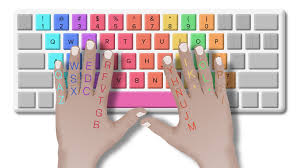
Find the Home Row: Your entire practice must revolve around the "home row." Place your left-hand index finger on the 'F' key (you'll feel a small bump) and your right-hand index finger on the 'J' key (another bump). Your other fingers will naturally rest on A, S, D, and K, L, ; respectively.
Practice Drills: Start with basic home row drills (e.g., "asdf jkl;"). Gradually expand to the top row (q, w, e, r, t) and bottom row (z, x, c, v, b).
Keep Your Eyes on the Screen: This is the golden rule. It will be painfully slow at first. You will feel your speed drop to 10 WPM. This is normal. By forcing your brain to remember key locations, you are building the muscle memory that will soon allow you to type faster and more accurately than you ever could by looking down.
3. Build Your Speed: Consistency Beats Intensity
You cannot cram for a typing test. It's a physical skill, like playing a musical instrument. You must build muscle memory over time.
Practice Daily: A consistent 30-45 minutes of focused practice every day is far more effective than a single 4-hour session on the weekend.
Accuracy First, Speed Second: For the first two weeks, do not even look at your WPM. Focus 100% on hitting the correct key every single time. Your goal should be 98-100% accuracy, even if your speed is only 15 WPM. Speed is the natural byproduct of accuracy. As your fingers learn the patterns, they will move faster on their own.
Use Online Typing Tutors: Don't just type random paragraphs. Use structured tools that drill specific keys and common words.
Typing.com /Monkeytype.com: Excellent for beginners learning the key positions and touch typing from scratch.
10FastFingers: Great for quick warm-ups and practicing the most common English words.
Typing Master: The classic software. Practicing with this will familiarize you with the type of interface JKSSB often uses.
4. The 90% Accuracy Rule: Why It's More Important Than Speed
Let's be clear: a candidate with 35 WPM and 91% accuracy will pass. A candidate with 50 WPM and 89% accuracy will fail. Your entire preparation must be built around protecting your accuracy.
Understand Error Penalization: Every error you make (a wrong letter, an extra space, missed punctuation) deducts from your gross speed to give you your "net speed." High errors will devastate your net WPM.
Focus on Rhythm: Typing is about flow, not frantic bursts. Find a steady, consistent rhythm you can maintain. Listen to the "click-clack" of your keys and try to make it even, like a metronome.
Practice Punctuation and Numbers: The test passage will not just be words. It will include commas, periods, capital letters (requiring the 'Shift' key), and potentially numbers. Many aspirants practice only simple words and then panic when they have to type "Mr. Sharma's account, No. 49-B, was opened in 2023." Incorporate these characters into your daily drills.
5. Simulate the Real Exam (Panic-Proof Yourself)
Your 50 WPM in the comfort of your home is not the same as your speed in a silent exam hall with 50 other candidates. You must simulate exam conditions to build resilience.
Take 10-Minute Timed Tests: The 10-minute duration is an endurance challenge. Your fingers will get tired, and your focus may drift. Take at least one full 10-minute test every day.
Practice with Unfamiliar Passages: Don't just re-type the same paragraph. You need to train your brain to read and type new information simultaneously. Use online "typing test" websites or find official-looking paragraphs (like legal or government circulars) to practice.
Get Used to a Standard Keyboard: If you practice on a laptop keyboard, try to get a standard desktop keyboard (like a Dell, HP, or Lenovo one). This is what you will most likely use in the test center. The key travel and spacing are different and can throw you off.
Don't Fixate on Mistakes: In the real test, if you make a mistake and the backspace key won't let you fix it, let it go. Obsessing over one error will cause you to make three more. Take a deep breath, refocus, and continue.
Final Exam Day Strategy
Warm-Up: Don't go in cold. Do a 10-15 minute typing warm-up at home or on a practice system at the center if they allow it.
Get Comfortable: Arrive early. Adjust your chair and keyboard height. Make sure your posture is perfect—back straight, feet flat, wrists off the table.
Read the Passage: Before the timer starts, scan the first couple of lines of the passage. Look for any tricky words, punctuation, or numbers.
Find Your Rhythm: Start at a steady, deliberate pace. Don't burst out of the gate. Your goal for the first minute is 100% accuracy to build confidence. You can gradually increase speed in the middle.
Breathe: It's natural to feel tense. Remember to breathe. Holding your breath increases panic and leads to errors.
By following this structured plan—mastering touch typing, prioritizing accuracy over speed, and consistently simulating exam conditions—you will be fully prepared to clear the JKSSB Junior Assistant typing test with ease. Good luck!
Visit official website JKSSB EXAM