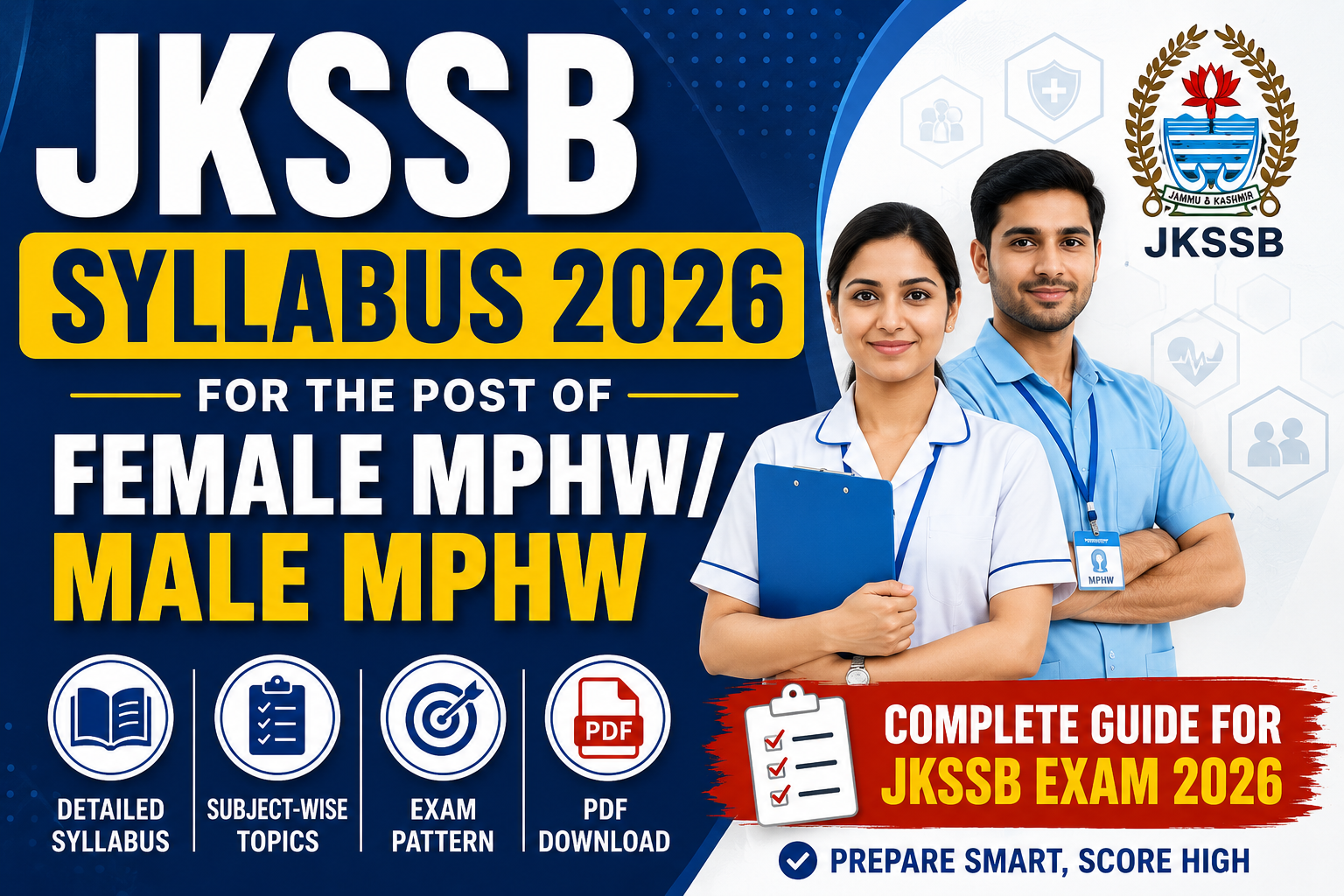
JKSSB Female MPHW & Male MPHW Syllabus 2026: Complete Subject-Wise Syllabus, Exam Pattern
Preparing for the JKSSB Female MPHW (Multipurpose Health Worker) and Male MPHW Recruitment Examination 2026? Understanding the latest syllabus is the most important step toward securing a high score.
The Jammu and Kashmir Services Selection Board (JKSSB) conducts the MPHW examination to recruit qualified health workers who play a crucial role in delivering healthcare services at the community level. The syllabus is designed to assess candidates' knowledge of nursing, community health, anatomy, physiology, microbiology, nutrition, hygiene, sociology, psychology, and public health.
In this comprehensive guide, we have explained the complete JKSSB Female MPHW/Male MPHW Syllabus 2026, exam pattern, important topics, and preparation strategy to help you prepare effectively.
JKSSB Female MPHW/Male MPHW Exam Pattern 2026
| Particular | Details |
|---|---|
| Exam Conducting Body | JKSSB |
| Post Name | Female MPHW / Male MPHW |
| Total Marks | 120 |
| Duration | 2 Hours |
| Question Type | Objective Type MCQs |
| Level | Diploma/Professional Level |
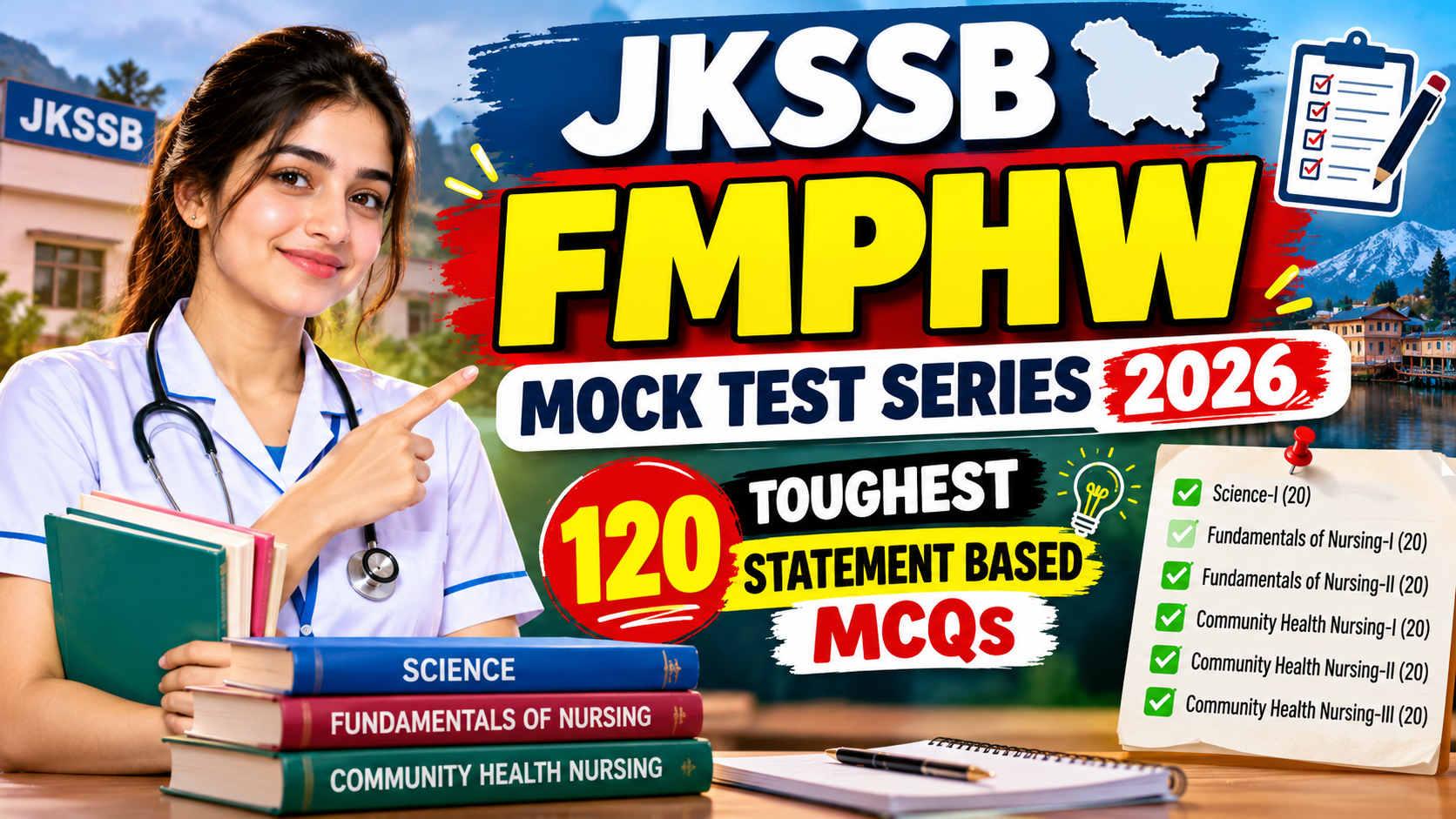
The examination consists of six major sections carrying equal weightage.
| Subject | Marks |
|---|---|
| Science-I | 20 |
| Fundamentals of Nursing-I | 20 |
| Fundamentals of Nursing-II | 20 |
| Community Health Nursing-I | 20 |
| Community Health Nursing-II | 20 |
| Community Health Nursing-III | 20 |
| Total | 120 |
Download official syllabus link
JKSSB Female MPHW/Male MPHW Syllabus 2026
1. Science-I (20 Marks)
Science forms the foundation of healthcare services. Questions are generally asked from fundamental concepts related to human health and behavior.
Topics Covered
Anatomy and Physiology
Microbiology
Psychology
Sociology
Hygiene
Nutrition
Candidates should focus on understanding concepts rather than rote memorization because many questions are application-based.
Anatomy
Anatomy helps health workers understand the structure of the human body.
Important Topics
Introduction to Anatomy
Skeletal System
Bones and Bone Development
Axial Skeleton
Appendicular Skeleton
Surface Anatomy
Structure and Function of Joints
Types of Joints
Muscular System
Heart Structure
Respiratory System Structure
Human Reproductive System
Embryology and Prenatal Development
Preparation Tip
Pay special attention to diagrams and body systems because these areas frequently appear in health worker examinations.
Physiology
Physiology deals with the functioning of the human body.
Important Topics
Organization of Living Things
Cells, Tissues and Organs
Skin Structure and Functions
Muscular System
Muscle Contraction
Nervous System
Brain and Spinal Nerves
Special Senses (Eye and Ear)
Blood and Circulation
Heart Functions
Digestive System
Liver and Pancreas
Excretory System
Endocrine System
Human Reproduction
Understanding body functions makes it easier to answer community health and nursing questions.
Fundamentals of Nursing-I (20 Marks)
This section evaluates basic nursing knowledge and patient care principles.
Section A: Introduction to Nursing
Topics include:
Principles of Nursing
Patient Care
Organizing Care for Different Patients
Care of Seriously Ill Patients
Care of Chronically Ill Patients
Care of Terminally Ill Patients
Section B: Nursing Techniques
Important areas:
Health Records
Family Care Records
Medical Records
Reporting Systems
Referral Systems
Maintenance of Equipment
Ward Management
Section C: First Aid & Emergency Nursing
Focus Areas:
Emergency Care
First Aid Principles
Patient Safety
Accident Management
Immediate Nursing Interventions
Fundamentals of Nursing-II (20 Marks)
This section focuses on maternal, child, family, and community health.
Child Health
Topics include:
Growth and Development
Child Care
Child Nutrition
Child Health Promotion
Maternal Health
Important topics:
Maternal Care
Pregnancy Care
Maternal Risk Factors
Socioeconomic Factors Affecting Maternal Health
Family Health & Community Health
Key concepts:
Family Health Care
Home Visits
Domiciliary Health Services
Prevention of Communicable Diseases
Environmental Health
School Health Services
Community Health Nursing-I (20 Marks)
This is one of the most important sections in the syllabus.
Domiciliary Midwifery
Topics include:
Contacting Antenatal Mothers
Home Deliveries
Post-Natal Care
Record Maintenance
Midwifery and Maternity Nursing
Candidates should prepare:
Reproductive System
Pregnancy
Labour
Normal Puerperium
Obstetric Complications
Obstetric Operations
Drugs Used in Obstetrics
Family Planning & Family Welfare
Important areas:
Family Planning Methods
National Family Welfare Programme
Organizing Family Welfare Activities
Community Health Nursing-II (20 Marks)
This section focuses on health awareness and communication.
Nutrition Education
Topics include:
Maternal Nutrition
Child Nutrition
Nutrition Education Methods
Nutrition Communication
Health Education
Prepare:
Health Teaching Process
Approaches to Health Education
Community Health Education
Health Awareness Activities
Communication Skills & Audio Visual Aids
Important topics:
Communication Process
Health Worker Communication Skills
Audio Visual Aids
Preparation of Educational Materials
Utilization of Teaching Aids
Strong communication skills are essential for effective community health work.
Community Health Nursing-III (20 Marks)
This section carries significant importance because it covers disease prevention and management.
Basic Medicine & Pharmacology
Candidates should understand:
Common Medicines
Drug Administration
Pharmacological Basics
Community Drug Use
Health Problems & Health Planning
Topics include:
Public Health Problems
Health Planning
Welfare Services
Health Programmes
Communicable Diseases
Prepare the following thoroughly:
| Disease | Important Areas |
|---|---|
| Malaria | Prevention, Symptoms, Treatment |
| Dengue | Control Measures |
| Typhoid | Transmission and Prevention |
| Cholera | Community Control |
| Hepatitis | Causes and Prevention |
| Tuberculosis | Detection and Management |
| Rabies | Prevention |
| Measles | Immunization |
| Chickenpox | Symptoms and Care |
| Mumps | Prevention |
Questions from communicable diseases are commonly asked in health worker examinations.
Mental Diseases
Important Topics:
Prevention of Mental Illness
Early Detection
Community Mental Health
School Health Services
Family Health Services
Mental Disorders
Microbiology
Microbiology is essential for understanding infection control.
Topics Covered
Classification of Microorganisms
Bacteria
Viruses
Fungi
Parasites
Sources of Infection
Modes of Transmission
Immunity
Vaccines
Food Poisoning
Blood-Borne Infections
Collection of Specimens
Candidates should understand practical applications rather than focusing solely on definitions.
Sociology
Sociology helps health workers understand society and communities.
Important Topics
Social Groups
Community Structure
Rural and Urban Communities
Social Processes
Social Control
Marriage and Family
Social Stratification
Community-based questions are frequently asked from this section.
Psychology
Psychology is important because health workers interact with people from different backgrounds daily.
Topics Covered
Human Behaviour
Life Stages
Emotions
Defence Mechanisms
Interpersonal Relations
Learning and Motivation
Behavioural Change
Hygiene
Questions from hygiene are generally scoring and straightforward.
Important Topics
Personal Hygiene
Skin Care
Hair Care
Dental Hygiene
Menstrual Hygiene
Mental Hygiene
Health in Childhood
Adolescent Health
Adult Health
Old Age Health
Home Sanitation
Waste Disposal
Ventilation
Safety in Home
Nutrition
Nutrition is among the highest-scoring portions of the syllabus.
Important Topics
Balanced Diet
Carbohydrates
Proteins
Fats
Vitamins
Minerals
Water
Food Values
Maternal Nutrition
Child Nutrition
Food Preservation
Cooking Methods
Malnutrition
Deficiency Diseases
Food Hygiene
Nutrition Education
Quick Nutrition Table
| Nutrient | Main Function |
|---|---|
| Carbohydrates | Energy |
| Protein | Body Building |
| Fat | Energy Storage |
| Vitamins | Protection and Growth |
| Minerals | Body Regulation |
| Water | Metabolism and Hydration |
Best Preparation Strategy for JKSSB MPHW Exam
Step 1: Complete Core Subjects
Start with:
Anatomy
Physiology
Nursing Fundamentals
These form the foundation for most questions.
Step 2: Focus on Community Health
Give special attention to:
Midwifery
Family Welfare
Health Education
Communicable Diseases
These sections usually contribute heavily to the final score.
Step 3: Revise Regularly
Prepare short notes for:
Nutrition
Microbiology
Psychology
Sociology
Hygiene
These subjects can help boost your marks significantly.
Step 4: Practice MCQs
Solve previous-year health worker and nursing-related MCQs regularly to improve speed and accuracy.
ALSO READ: DOWNLOAD JKSSB Prosthetic/Orthotic Technician SYLLABUS 2026
Last Words for the jkssb female and male fmphw and mphw aspirants
The JKSSB Female MPHW/Male MPHW Syllabus 2026 is designed to assess both theoretical knowledge and practical understanding of healthcare services. Candidates who build strong fundamentals in Anatomy, Physiology, Nursing, Community Health, Nutrition, Microbiology, and Disease Prevention will have a significant advantage in the examination.
A smart preparation strategy, consistent revision, and regular MCQ practice can greatly improve your chances of securing a top score and successfully qualifying for the JKSSB Female MPHW/Male MPHW recruitment examination.